

In Vitro Fertilization (IVF) is a powerful fertility treatment that can help many couples achieve pregnancy. While conception normally happens inside the body—when a sperm fertilizes an egg in the fallopian tube—IVF takes place outside the body. This is where the term “In Vitro,” which means “in glass” in Latin, comes from. In an IVF procedure, eggs are retrieved from the woman and fertilized with sperm in a laboratory, creating an embryo that is then transferred back into the uterus.
Is IVF Right for You?
IVF is often recommended for couples facing a variety of fertility challenges, including:
- Unexplained infertility: When the cause of infertility can’t be identified.
- Blocked or absent fallopian tubes: Preventing the natural union of egg and sperm.
- Infections: Conditions like endometriosis or pelvic inflammatory disease (from STDs) that can affect fertility.
- Male factor infertility: When there’s a low sperm count or poor sperm motility.
- Failed treatments: If other methods, such as Artificial Insemination (AI), have not been successful.
Every couple’s journey is unique, and our approach is tailored to your specific needs. The following information provides a general overview of what you can expect during the process.
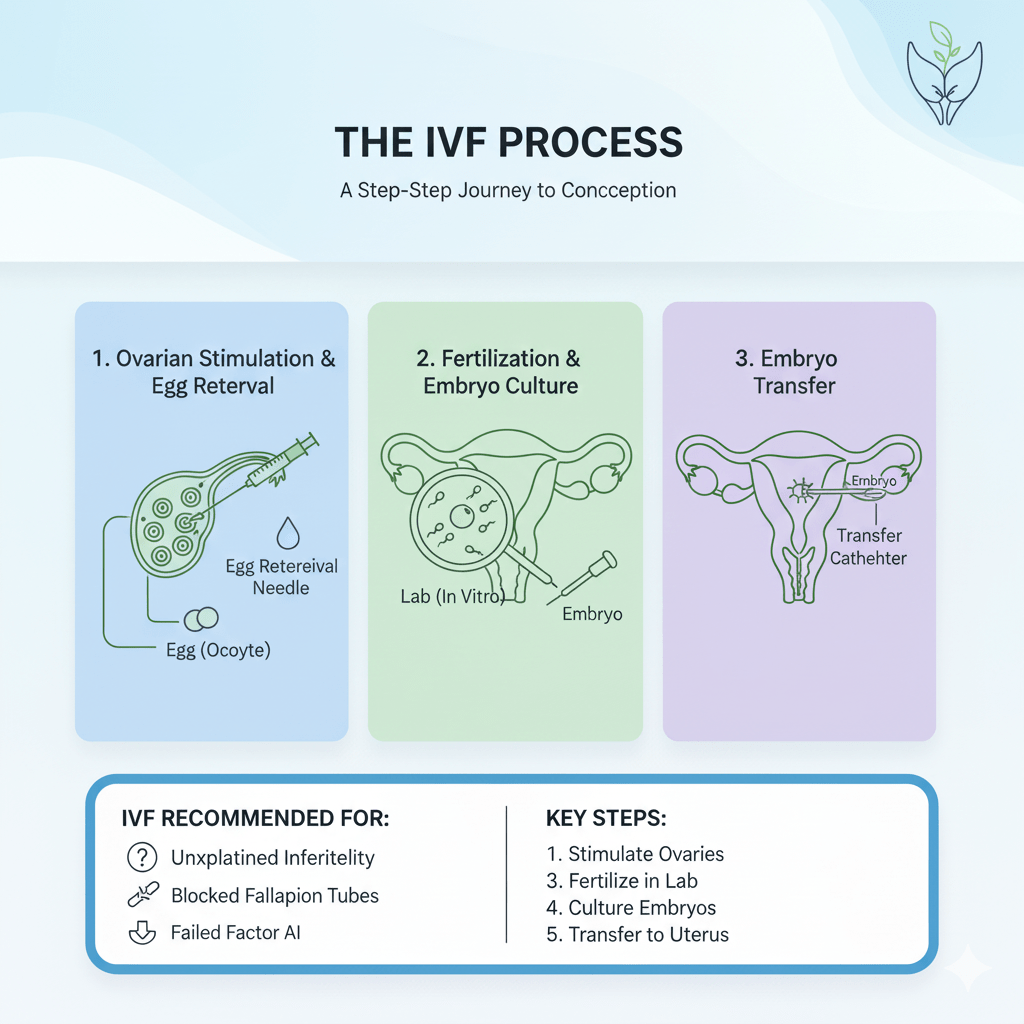
The IVF Procedure: Step-by-Step
The IVF process involves several key stages, from preparing the body to the final embryo transfer.
- Ovarian Stimulation: You’ll receive medication to stimulate your ovaries to produce multiple eggs. This is carefully monitored with vaginal ultrasounds and blood tests to track the development of the follicles and hormone levels.
- Egg Retrieval: When the eggs are mature, an hCG (Human Chorionic Gonadotropin) injection is administered. About 35 to 37 hours later, the eggs are retrieved in a short procedure under light anesthesia. Using an ultrasound for guidance, a thin, hollow needle is used to gently collect the eggs from the ovaries. This is a delicate and time-sensitive step, as collecting the eggs too early or too late can affect their viability.
- Fertilization in the Lab: After retrieval, the eggs are immediately taken to our specialized IVF laboratory. Our embryologists identify and isolate the eggs and place them with the prepared sperm in incubators to allow fertilization to occur. The resulting fertilized eggs are now called embryos.
- Embryo Development & Transfer: Over the next 2 to 5 days, the embryos are carefully monitored to ensure they are developing correctly. When they are ready, the best quality embryos are transferred back into your uterus. This is a simple procedure where a thin catheter is used to place the embryos through the cervix, often guided by ultrasound.
- Post-Transfer Care: Following the transfer, you will receive additional hormone treatments, such as progesterone, to support the early stages of pregnancy. A pregnancy test is typically performed about 14 days after the egg collection.
Potential Complications
While IVF is a safe and common procedure, it’s important to be aware of the potential risks and complications.
- Reactions to Medication: Some people may experience mild side effects from fertility drugs, such as headaches, hot flashes, or mood swings.
- Ovarian Hyperstimulation Syndrome (OHSS): This is a rare but serious overreaction to fertility drugs, which can cause a swollen stomach, pain, and nausea.
- Multiple Pregnancies: IVF increases the likelihood of a multiple pregnancy (twins, triplets, etc.), which carries its own set of health risks for both the mother and the babies.
- Miscarriage: The risk of miscarriage following a successful IVF pregnancy is the same as with a natural pregnancy.
 Rhia Fertility and IVF Centre